Swig Pay Per Hour: How Much Can Swig Delivery Partners Earn in 2026?
Introduction
The gig economy has transformed the way people earn money in India. Thousands of riders now work as delivery partners for food delivery and quick-commerce platforms, creating flexible income opportunities without the restrictions of a traditional 9-to-5 job. Among these platforms, Swig has become one of the most discussed names for people looking to earn through food delivery services.
One of the most frequently searched questions online is: “How much is Swig pay per hour?”
The answer is not as simple as a fixed hourly wage. Unlike traditional employment models, Swig delivery partners earn through completed orders, distance-based payouts, incentives, peak-hour bonuses, and customer tips. Because of this structure, earnings can vary significantly depending on location, working hours, demand levels, and rider efficiency.
For students, freelancers, part-time workers, and individuals looking for extra income, understanding the real earning potential is essential before joining a delivery platform. This guide provides a detailed breakdown of Swig’s pay per hour, monthly income expectations, incentive programs, expenses, and strategies to maximize earnings in 2026.
Can you visit: Swig Menu With Prices 2026
Quick Overview of Swig Pay Per Hour
Before diving into the details, here is a quick snapshot of estimated delivery partner earnings.
| Earnings Type | Estimated Range |
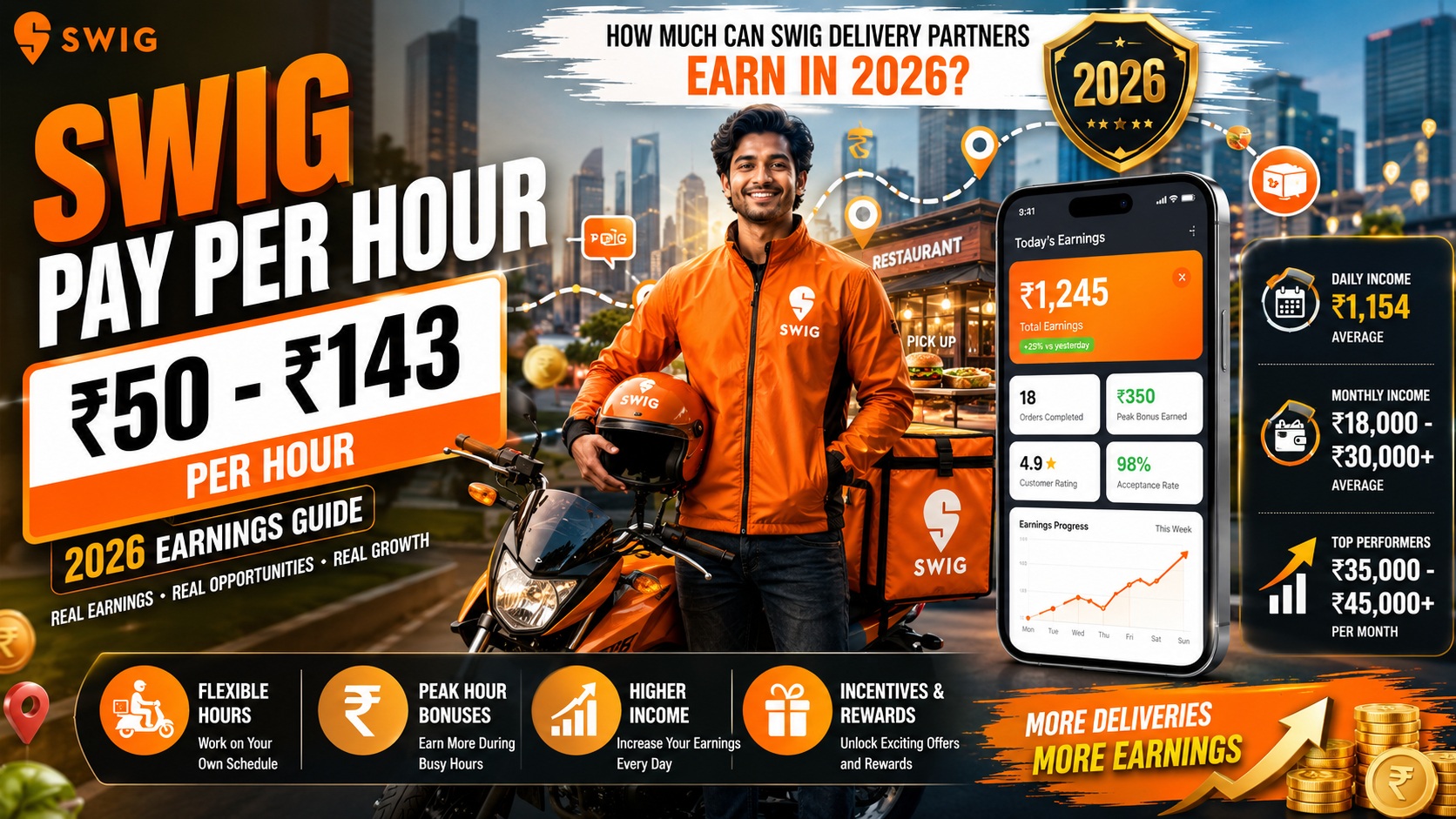
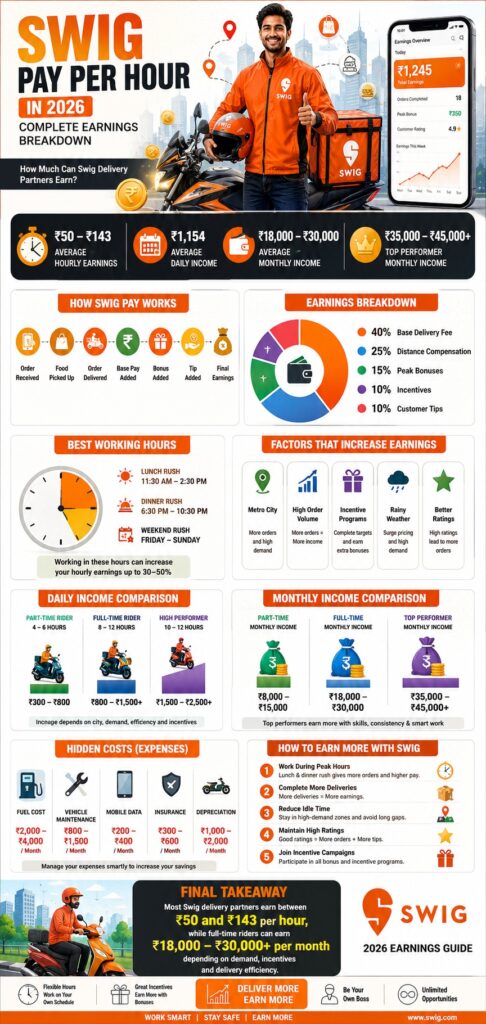
| Average Hourly Earnings | ₹50 – ₹143 |
| Daily Income | ₹500 – ₹1,500+ |
| Part-Time Monthly Income | ₹8,000 – ₹15,000 |
| Full-Time Monthly Income | ₹18,000 – ₹30,000+ |
| High Performer Income | ₹35,000 – ₹45,000+ |
Actual earnings depend on multiple factors, including:
- City and location
- Order volume
- Peak-hour demand
- Delivery distance
- Incentive eligibility
- Working hours
- Fuel expenses
- Rider performance
What Is Swig Pay Per Hour?
Swig pay per hour refers to the effective hourly income earned by a delivery partner while actively working on the platform.
Unlike salaried jobs, Swig does not usually offer a fixed hourly wage. Instead, riders earn based on deliveries completed during their working session.
This means two riders working for the same number of hours may earn completely different amounts.
For example:
- Rider A works 5 hours during slow afternoon periods.
- Rider B works 5 hours during lunch and dinner rush periods.
Even though both worked the same number of hours, Rider B may earn significantly more because demand is higher and incentive opportunities are better.
This performance-based structure is common throughout the gig economy and is designed to reward efficiency and availability during high-demand periods.
Understanding How Swig Delivery Payments Work
To accurately calculate hourly earnings, you must first understand how delivery payments are structured.
Each completed order may include several earning components.
Base Delivery Fee
Every completed delivery generally includes a fixed base amount.
This payment serves as the foundation of rider earnings and is usually calculated according to local market conditions.
Distance-Based Compensation
Longer deliveries generally generate higher payouts because they require additional travel time and fuel usage.
Distance compensation helps offset operating costs while rewarding riders for extended routes.
Peak-Hour Bonuses
Demand typically spikes during:
- Lunch hours
- Dinner hours
- Weekends
- Public holidays
- Festivals
During these periods, Swig may provide additional incentives to encourage more delivery partners to stay online.
Surge Pricing
Bad weather, heavy demand, and special events often create surge pricing opportunities.
These temporary increases can significantly boost hourly earnings.
Customer Tips
Customers occasionally provide tips through the app or in cash.
Although tips are not guaranteed, they can contribute meaningfully to overall earnings.
Factors That Affect Swig’s Hourly Earnings
1. Location
Swig Location remains one of the most important earning factors.
Delivery partners in large metropolitan cities often receive more orders compared to riders in smaller towns.
Major earning markets typically include:
- Mumbai
- Delhi
- Bengaluru
- Hyderabad
- Chennai
- Pune
Higher population density generally leads to more delivery requests and reduced waiting times.
2. Time of Day
Working during high-demand periods dramatically improves earning potential.
The most profitable delivery windows are usually:
Lunch Rush
11:30 AM – 2:30 PM
Dinner Rush
6:30 PM – 10:30 PM
During these periods, riders often complete more deliveries within a shorter timeframe.
3. Delivery Efficiency
Experienced riders learn how to:
- Select profitable delivery zones
- Reduce waiting time
- Navigate traffic efficiently
- Complete more deliveries per hour
Higher efficiency directly increases hourly earnings.
4. Incentive Programs
Many riders earn a significant portion of their income through incentive programs.
Meeting delivery targets can unlock additional bonuses that substantially improve effective hourly rates.
5. Weather Conditions
Rainy weather often increases demand because fewer people want to leave their homes.
As a result:
- Order volume increases
- Surge pricing becomes common
- Incentives may improve
Many riders report some of their highest earnings during rainy weekends and holiday seasons.
How Much Can Swig Delivery Partners Earn Per Order?
Per-order earnings vary depending on:
- Delivery distance
- Demand level
- Location
- Incentives
- Surge conditions
Typical payouts can range between:
₹15 to ₹90+ per delivery
Consider the following example:
Scenario A
- Short distance
- Low demand
- Afternoon delivery
Estimated payout:
₹20–₹35
Scenario B
- Long distance
- Dinner rush
- Rainy weather
- Surge pricing active
Estimated payout:
₹60–₹90+
Because earnings are calculated dynamically, there is no universal payment amount for every order.
Daily Income Potential
Many prospective riders care more about daily earnings than hourly figures.
The reason is simple.
Daily income provides a clearer understanding of actual earning potential.
Part-Time Delivery Partners
Part-time riders generally work:
- 4–6 hours daily
Estimated daily income:
₹300 – ₹800+
This option is popular among:
- Students
- Freelancers
- Side hustlers
- Individuals with full-time jobs
Full-Time Delivery Partners
Full-time riders generally work:
- 8–12 hours daily
Estimated daily income:
₹800 – ₹1,500+
Some highly active riders can exceed these numbers during strong demand periods and promotional campaigns.
Why Effective Hourly Earnings Matter
One common mistake is focusing only on payout amounts.
Smart delivery partners calculate effective hourly earnings.
Formula:
Effective Hourly Earnings = Total Earnings ÷ Total Working Hours
For example:
Total Earnings = ₹900
Hours Worked = 8
Effective Hourly Rate = ₹112.50 per hour
This metric provides a more realistic picture of income performance and helps riders identify the most profitable working hours.
Monthly Income Expectations for Swig Delivery Partners
When evaluating any delivery platform, monthly income is usually the most important factor. While hourly earnings provide a short-term picture, monthly earnings help determine whether the work can support financial goals and daily expenses.
Part-Time Monthly Income
Part-time riders typically work:
- 4–6 hours daily
- Lunch or dinner shifts
- Weekends and holidays
Estimated monthly income:
₹8,000 – ₹15,000+
Many students and freelancers prefer this model because it offers flexible working hours without interfering with studies or primary work commitments.
Full-Time Monthly Income
Full-time delivery partners generally work:
- 8–12 hours per day
- Multiple peak-hour shifts
- Most days of the week
Estimated monthly earnings:
₹18,000 – ₹30,000+
High Performer Earnings
Some experienced riders maximize earnings through:
- Peak-hour deliveries
- Incentive programs
- High-demand zones
- Efficient route planning
Estimated monthly income:
₹35,000 – ₹45,000+
In major cities, highly active delivery partners may occasionally exceed these figures during festival seasons and promotional campaigns.
Swig Incentives and Bonus Programs
One of the biggest factors affecting Swig’s pay per hour is incentives.
Many riders earn a significant percentage of their income through bonus structures rather than base delivery payments.
Common Incentive Types
Peak-Hour Rewards
Extra earnings during lunch and dinner rush hours.
Daily Completion Bonuses
Bonuses are awarded after completing a certain number of deliveries within a day.
Weekly Performance Incentives
Rewards for maintaining consistent delivery activity throughout the week.
Festival Campaign Bonuses
Special incentives offered during:
- Diwali
- Eid
- Christmas
- New Year
- Independence Day
Surge Pricing Rewards
Additional payments during:
- Rainy weather
- Heavy traffic conditions
- High-demand periods
Understanding how these programs work can dramatically improve overall earnings.
Hidden Costs That Reduce Real Earnings
Many new riders focus only on gross earnings.
However, successful delivery partners pay close attention to net income.
Fuel Costs
Fuel is usually the largest expense.
A rider covering long distances every day can spend a substantial amount on petrol.
Vehicle Maintenance
Regular maintenance expenses include:
- Engine oil
- Tires
- Brake repairs
- Servicing
- Chain maintenance
Mobile Internet
Because delivery apps require constant connectivity, riders must maintain reliable mobile data plans.
Insurance Costs
Many riders choose additional insurance protection for:
- Accidents
- Vehicle damage
- Medical emergencies
Vehicle Depreciation
The more a motorcycle is used, the faster its resale value decreases.
This hidden cost is often overlooked by new delivery partners.
Swig vs Zomato: Which Platform Pays Better?
Many riders compare food delivery platforms before choosing where to work.
The reality is that earnings depend more on local demand than on the platform itself.
Comparison Table
| Feature | Swig | Zomato |
| Flexible Hours | Yes | Yes |
| Incentive Programs | Available | Available |
| Peak-Hour Bonuses | Available | Available |
| Delivery Volume | Location Dependent | Location Dependent |
| Part-Time Opportunities | Excellent | Excellent |
| Full-Time Opportunities | Strong | Strong |
Which Platform Is Better?
The answer depends on:
- Your city
- Order volume
- Incentive availability
- Distance traveled
- Peak-hour demand
Many experienced gig workers test multiple platforms before deciding which one delivers better earnings in their area.
How to Become a Swig Delivery Partner
Joining Swig as a delivery partner is relatively simple.
Step 1: Register Online
Complete the application process through the official partner registration system.
Step 2: Submit Required Documents
Verification is required before activation.
Step 3: Complete Onboarding
After approval, new partners receive onboarding guidance and app training.
Step 4: Start Delivering
Once activated, riders can begin accepting delivery requests and earning income.
Documents Required for Registration
Most delivery partners are asked to provide:
- CNIC/Identification
- Driving License
- Motorcycle Registration
- Bank Account Details
- Mobile Number
- Recent Photograph
Requirements may vary depending on region and platform policies.
Skills That Help Riders Earn More
Successful riders often share similar habits.
Time Management
Working during profitable hours improves earning potential.
Route Optimization
Using navigation efficiently reduces fuel expenses and increases delivery completion rates.
Consistency
Riders who remain active during peak periods generally receive better earning opportunities.
Customer Service
Professional communication often results in:
- Better ratings
- Increased customer satisfaction
- More tips
Best Time to Work for Maximum Earnings
The highest-paying periods generally include:
Lunch Peak
11:30 AM – 2:30 PM
Dinner Peak
6:30 PM – 10:30 PM
Weekend Rush
Friday evening through Sunday night
Festival Seasons
Demand often rises significantly during major celebrations.
Working strategically during these periods can increase effective hourly earnings.
Is Swig Delivery Work Worth It in 2026?
For many people, the answer is yes.
Advantages
✔ Flexible schedule
✔ Low entry barriers
✔ Part-time income opportunities
✔ Full-time earning potential
✔ Performance-based growth
✔ No traditional office environment
Challenges
✘ Income fluctuations
✘ Fuel expenses
✘ Weather-related difficulties
✘ Vehicle maintenance costs
✘ Demand uncertainty
People who manage expenses carefully and focus on high-demand periods generally achieve better results.
Conclusion: Swig’s
Swig’s pay per hour is not a fixed figure because delivery partner earnings depend on multiple variables, including order volume, incentives, city, delivery distance, and working hours. Most riders earn between ₹50 and ₹143 per hour, while full-time delivery partners can generate monthly earnings ranging from ₹18,000 to ₹30,000 or more.
The key to maximizing earnings lies in understanding peak-hour demand, managing fuel expenses, qualifying for incentive programs, and improving delivery efficiency. Riders who approach delivery work strategically often achieve significantly better results than those who simply spend long hours online.
Whether you are a student looking for extra income, a freelancer seeking flexibility, or someone exploring gig economy opportunities, Swig delivery work can provide a practical and flexible way to earn in 2026.
Frequently Asked Questions
What is the average Swig pay per hour?
Most delivery partners report earning between ₹50 and ₹143 per hour, depending on city, demand, incentives, and delivery efficiency.
Can I work part-time with Swig?
Yes. Many riders work 4–6 hours daily as a side income opportunity.
How much can a Swig delivery partner earn per month?
Part-time riders often earn ₹8,000–₹15,000 per month, while full-time riders commonly earn ₹18,000–₹30,000 or more.
Does Swig provide a fixed salary?
Delivery partners generally earn through completed deliveries, bonuses, incentives, and tips rather than a fixed salary.
What affects earnings the most?
Major factors include:
- City
- Order volume
- Peak-hour demand
- Incentives
- Distance traveled
- Fuel costs
- Delivery efficiency