
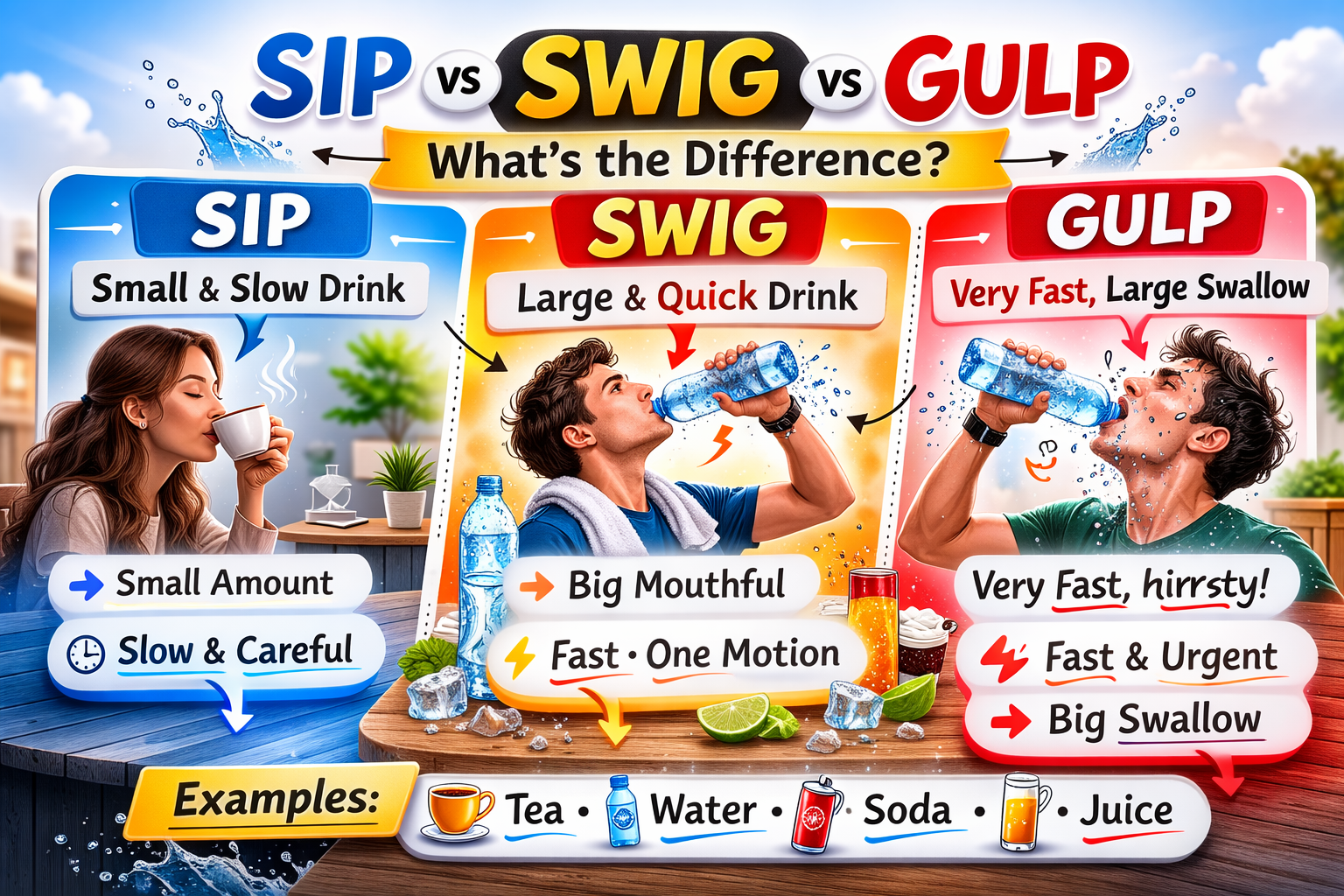
What Does Swig Mean? Definition, Examples, and Difference Between Sip and Gulp
Many English words create a clear image the moment you hear them. One such word is swig. When someone says they took a swig of a drink, most people imagine a person quickly lifting a bottle and taking a big mouthful. A swig means drinking a large mouthful of liquid quickly, usually in one motion instead of taking small sips. People often use this word when someone drinks directly from a bottle, can, or cup in a casual way. The word is common in everyday English and appears in conversations, movies, books, and storytelling.
Many popular Swig drinks have unique and creative names that make them stand out on the menu. One refreshing example is the Swig Endless Summer drink, a citrus-flavored dirty soda made with Mountain Dew, pomegranate syrup, grapefruit flavor, and fresh lime. Its bright and tangy taste makes it one of the most popular fruity drinks on the Swig menu. If you want to explore its ingredients, calories, and flavor in detail, check out the complete guide to the “Swig Endless Summer Drink.”
Swig Meaning in English
The swig’s meaning in English is simple. It refers to drinking a noticeable amount of liquid quickly. Unlike sipping slowly, a swig suggests a bigger and faster drink. People often take a swig when they are thirsty or when they want a quick refreshment.
For example, someone finishing a workout might grab a water bottle and take a swig before resting.
Simple Definition of Swig
A simple definition is:
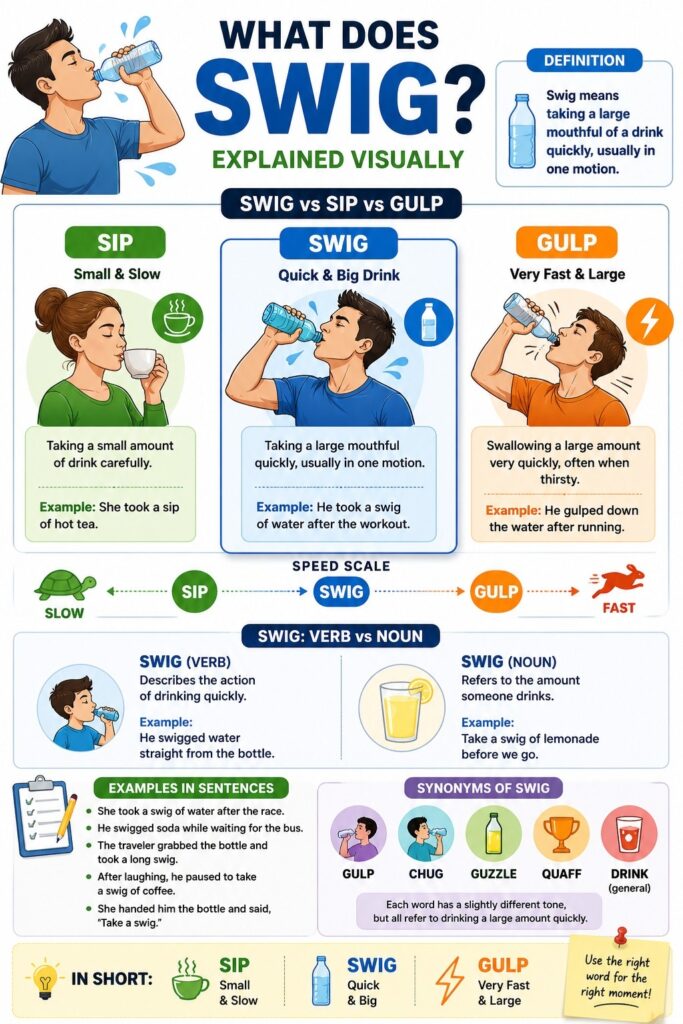
Swig means taking a large drink quickly, usually in one motion.
Examples:
- “She took a swig of water after the workout.”
- “He swigged soda from the bottle.”
- “After the long walk, I needed a big swig of cold water.”
These examples show how the word describes both the action and the amount of drink.
Explore: Swig Menu With Prices 2026
Swig as a Verb and a Noun
One interesting thing about the word swig is that it can work as both a noun and a verb.
Swig as a Verb
When used as a verb, it describes the action of drinking quickly.
Example:
“He swigged water straight from the bottle after the race.”
Swig as a Noun
As a noun, it refers to the amount someone drinks.
Example:
“She took a swig of lemonade before going back outside.”
Both forms share the same basic meaning: a quick, generous drink.
Explore complete: “what is Swig.”
Origin of the Word Swig
The word swig has been part of the English language for hundreds of years. Language experts believe it first appeared in English during the early seventeenth century. Although the exact origin is uncertain, linguists think the word may come from older Germanic terms related to swallowing or gulping. Interestingly, the sound of the word itself seems to imitate the action it describes. Words that mimic sounds or movements often stay popular because they are easy to remember.
Even after centuries, the meaning of swig has remained almost the same.
How Swig Is Used in Everyday English
People often use the word swig in casual situations. It usually describes someone drinking quickly when they feel thirsty or tired.
For example, after a long walk on a hot day, a person might grab a bottle and take a swig of water. The action is quick and satisfying.
Writers also use the word in storytelling. A character in a novel might pause during a conversation, take a swig of coffee, and continue talking. This small detail helps make the scene feel more realistic.
The word can describe drinking many different liquids, including:
- water
- juice
- soda
- coffee
- sports drinks
The key idea is drinking quickly and in a noticeable amount.
Examples of Swig in Sentences
Seeing the word in sentences makes its meaning easier to understand.
Here are some examples:
- “He took a swig of water after finishing the race.”
- “She swigged her soda while waiting for the bus.”
- “The traveler grabbed the bottle and took a long swig.”
- “After laughing, he paused to take a swig of coffee.”
- “She handed him the bottle and said, ‘Take a swig.’”
These examples show how natural the word sounds in everyday English.
Swig vs Sip vs Gulp
Many English words describe drinking, but each one suggests a different style.
| Word | Meaning | Example Situation |
| Sip | Small and careful drink | Drinking hot tea |
| Swig | Large quick mouthful | Drinking from a bottle |
| Gulp | Very fast, large swallow | Someone extremely thirsty |
A sip is slow and careful.
A swig is a bigger drink taken quickly but casually.
A gulp usually suggests urgency or strong thirst.
Understanding these differences helps learners choose the right word in different situations.
Synonyms of Swig
Common synonyms include:
- gulp
- chug
- guzzle
- quaff
- drink
Each word has a slightly different tone. For example, chug often appears in competitive drinking situations, while guzzle suggests drinking very quickly or excessively.
Still, swig remains one of the most common words for describing a quick drink.
Is Swig a Slang Word?
Many English learners wonder whether swig is slang.
The word is not slang, but it is considered informal. This means it is commonly used in conversations, stories, and casual writing. However, it may sound too relaxed for very formal academic writing. You will often hear the word in movies, books, and everyday conversations.
Conclusion
A swig refers to taking a large mouthful of a drink quickly, usually in a single motion. The word can function as both a noun and a verb, which makes it flexible in everyday speech. Despite being several centuries old, the word is still widely used today. People often use it when describing a quick drink from a bottle, cup, or can. Understanding the swig meaning also helps learners see the difference between similar words, such as sip and gulp.
Because the word is simple, vivid, and easy to understand, it continues to be a popular part of everyday English.
FAQs
What does take a swig mean?
It means to drink a large mouthful of liquid quickly.
What is the swig meaning in English?
Swig means taking a big drink quickly, usually from a bottle or cup.
Can you use swig for water?
Yes. The word can describe drinking water, juice, soda, or other beverages.
What is the difference between a sip and a swig?
A sip is a small and careful drink, while a swig is a larger drink taken quickly.
What is the past tense of swig?
The past tense is swigged, as in “He swigged water from the bottle.”